William Seymour
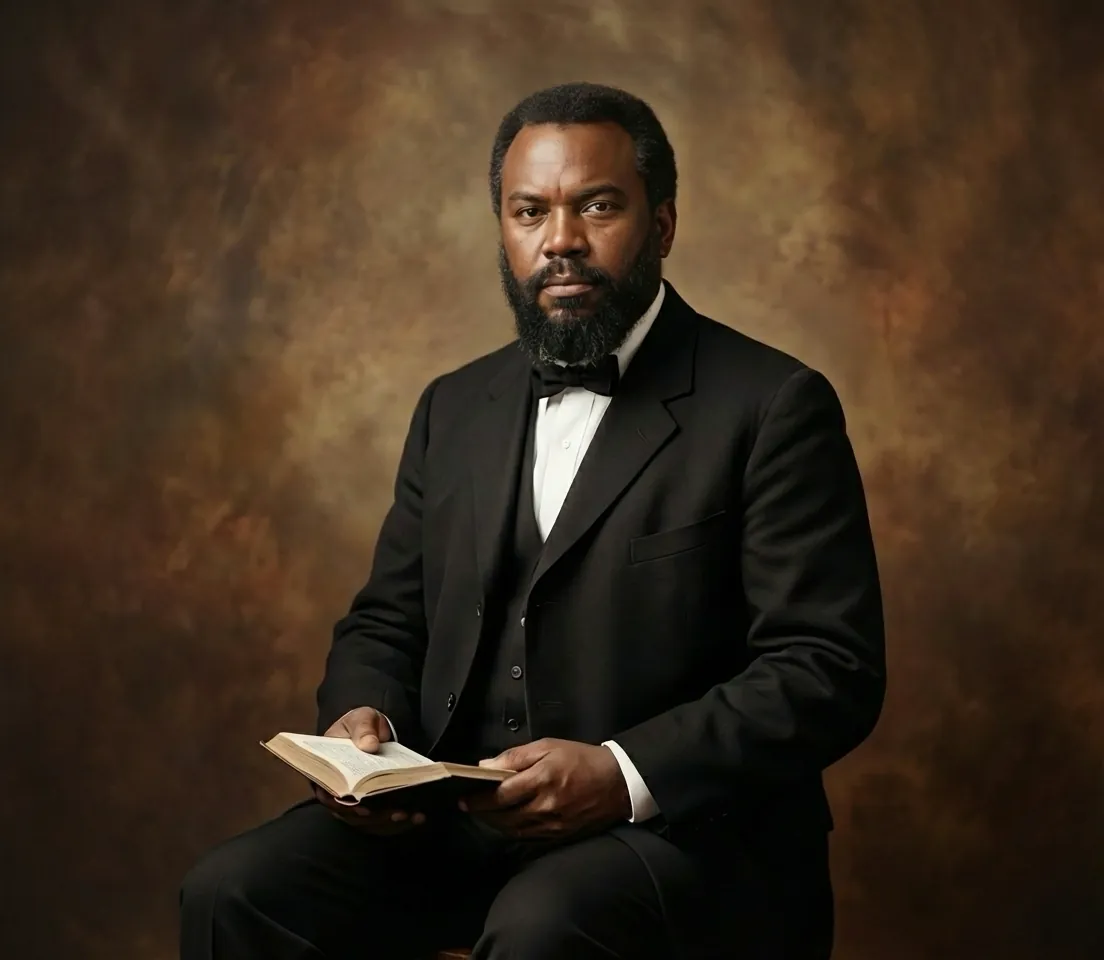 AI-generated image
William Joseph Seymour (1870–1922) was an African American holiness preacher whose leadership of the Azusa Street Revival (1906–1915) stands as one of history's most consequential demonstrations of the Way of Fire. From a mission on Azusa Street in Los Angeles, this one-eyed son of former slaves ignited a global movement that would eventually encompass over 600 million believers worldwide.1
The significance of Seymour lies not merely in the spectacular manifestations that accompanied his ministry, but in the extraordinary spiritual preparation that preceded it—years of hidden consecration that produced a vessel capable of carrying revival fire to the nations.
The Foundation: Hidden Years of Consecration
Before Azusa Street became a name known worldwide, Seymour spent years in obscurity cultivating an intimate relationship with God through extraordinary prayer and fasting. His spiritual disciplines were remarkable even by the standards of devoted believers.1
Extended Prayer Life
During the years leading up to Azusa Street, Seymour regularly spent five to seven hours daily in prayer—a discipline that prepared him to steward global revival. This was not casual devotion but intensive, focused communion with God that built the spiritual authority he would need.
One account from Frank Bartleman's firsthand chronicle of the revival reveals the depth of Seymour's prayer life:
"Brother Seymour was recognized as the nominal leader in charge. But we had no pope or hierarchy. We were brethren. We had no human program. The Lord himself was leading."2
The Practice of Hidden Seeking
During services at the Azusa Street Mission, Seymour would often pray with his head inside a wooden crate or behind the pulpit, sometimes for hours, while the Spirit moved among the congregation.2 This was not performance but genuine humility—a man more interested in hearing from heaven than being seen by men.
This practice reflected a profound understanding that the leader's role was not to direct the meeting but to seek God on behalf of the people. The services often began with Seymour kneeling and putting his head inside an empty shoe box for extended periods of prayer.
Fasting Discipline
Seymour practiced regular extended fasting, understanding that breakthrough often requires sacrifice that goes beyond ordinary devotion. These periods of abstinence from food created spiritual sensitivity and authority that would prove essential when confronting demonic opposition and ministering to the sick.1
The Breakthrough: Azusa Street Revival
On April 9, 1906, at a small house on Bonnie Brae Street, the fire fell. After weeks of prayer and seeking, Seymour and a small group experienced the baptism of the Holy Spirit with speaking in tongues. The meetings quickly outgrew the house and moved to an abandoned African Methodist Episcopal church building at 312 Azusa Street.2
What happened next defied explanation and continues to impact Christianity worldwide:
Duration and Intensity
The revival ran continuously—with services occurring three times daily, seven days a week—for over three years. Some historians document continuous meetings for as long as ten years (1906–1915).2 This was not a brief spiritual excitement but a sustained outpouring that maintained its intensity through supernatural sustenance.
Racial Integration
In the Jim Crow era of American apartheid, Azusa Street was radically integrated. Blacks, whites, Hispanics, and Asians worshipped together—kneeling at the same altar, receiving from the same Spirit.3
This integration came at enormous personal cost to Seymour. White leaders eventually broke away, some explicitly citing unwillingness to follow a Black leader. Others promoted racist doctrines. Yet Seymour refused to compromise the unity of the Spirit. As one account noted:
"People of different races and nationalities prayed together at the altar... something virtually unheard of in that era of strict segregation."3
The "color line" was washed away by the blood of Jesus and the fire of the Spirit—a supernatural unity that only God could produce.
Documented Miracles
The revival was characterized not just by tongues but by dramatic supernatural manifestations that validated the apostolic nature of the outpouring.2
Creative Miracles
Perhaps the most striking category of miracles involved creative acts—God supplying what nature had not provided:
Missing eye restored: In one documented case, a woman who had lost an eye received a new one through prayer at Azusa Street. This was not improvement of existing tissue but the creation of a completely new organ.
Shortened limbs lengthened: Multiple testimonies document legs and arms being supernaturally lengthened to match their counterparts, eliminating lifelong disabilities.
Healing Miracles
The healing ministry at Azusa Street touched virtually every category of disease:
- Cancer healed: Multiple documented cases of cancer disappearing after prayer
- Blind eyes opened: Numerous testimonies of sight restored to those medically documented as blind
- Deaf ears unstopped: Those born deaf heard for the first time
- Paralysis reversed: Those who arrived in wheelchairs walked out under their own power
Supernatural Phenomena
Beyond healings, unusual supernatural phenomena accompanied the revival:
- Visible fire: Multiple eyewitnesses reported seeing fire above the building on Azusa Street, prompting fire department responses when no natural fire could be found
- Heavenly music: Attendees reported hearing angelic singing that had no earthly source
- Prophetic utterances: Accurate words of knowledge revealing hidden sins and future events
Seymour's Teaching: Love Over Signs
Despite the spectacular manifestations, Seymour consistently taught that love was the true evidence of Spirit baptism—not tongues, not miracles, but Christlike love.
"If you get angry, or speak evil, or backbite, I care not how many tongues you may have, you have not the baptism with the Holy Spirit."4
This emphasis on character over charisma distinguished Seymour from many who would claim his spiritual legacy. He understood that supernatural gifts without supernatural love produce spiritual pride rather than kingdom advancement.
Divine Love as the Supreme Test
Seymour taught that love was the "Bible evidence" of Spirit baptism—the fruit that validated the gifts:
"Divine love is the test... We are not to look for any particular sign, but to look for the fruit."4
This prevented the revival from devolving into a circus of competing manifestations. The true measure was not who could display the most spectacular gifts but who could demonstrate the deepest love.
The Cost of Racial Unity
Seymour's commitment to integrated worship eventually cost him dearly. White leaders who had initially embraced the revival began to distance themselves as it became clear that Seymour would not accept a subordinate role.3
Charles Parham, who had been Seymour's teacher (though he forced Seymour to sit in the hallway during classes because of his race), visited Azusa Street and denounced the revival as demonic, partly due to the racial mixing.
William Durham and others eventually split from Seymour's leadership, forming their own movements that often excluded or marginalized Black believers.
By the end of his life, the man who had ignited global Pentecostalism was largely forgotten, pastoring a small, dwindling congregation. Yet he never wavered from his conviction that the Spirit of God did not recognize racial divisions.1
The Spiritual Architecture
What produced such extraordinary fruit? Several factors combined:
Extended Private Preparation
Seymour's years of 5-7 hours daily prayer created a reservoir of spiritual authority. He was not a man seeking a platform but a man who had found God in secret and was simply being publicly revealed.
Radical Humility
The wooden crate over his head was not theatrics—it was theology in action. Seymour understood that human personality must decrease so that Christ could increase.
Unwavering Faith in Scripture
Seymour believed the Bible meant what it said about the availability of spiritual gifts. His simple faith that God would do what He promised positioned him to receive what religious sophistication would have explained away.
Persistence Through Opposition
When doors closed, Seymour kept praying. When people left, he kept seeking. When criticism mounted, he kept believing. The revival came to those who would not quit.
Global Impact
From Azusa Street, the Pentecostal movement spread worldwide:5
- Missionaries carried the fire to over 50 nations within two years of the revival's beginning
- The movement that began with a handful of seekers now encompasses over 600 million believers globally
- Pentecostalism has become the fastest-growing segment of world Christianity
The Azusa Street Revival is now recognized as one of the most significant spiritual events since Pentecost itself—all flowing from a one-eyed Black preacher who spent hours praying with his head in a box.
Why Seymour Matters Today
The Way of Fire demands what Seymour demonstrated:
1. Hidden preparation precedes public power. Years of obscure seeking produced months of global impact. There are no shortcuts to genuine spiritual authority.
2. Love authenticates power. Miracles without love produce pride. Seymour's insistence on love as the true evidence of Spirit baptism kept the revival pure.
3. Unity honors the Spirit. The racial integration of Azusa Street was not political correctness but spiritual necessity. The Holy Spirit does not recognize human divisions.
4. Humility sustains anointing. Seymour's practice of hiding himself during services prevented the cult of personality that has destroyed so many revivals.
5. Faithfulness outlasts fame. Even when forgotten by those he had blessed, Seymour remained faithful to his calling. The true test is not how you handle success but how you handle being set aside.
"The Azusa Street Revival demonstrates that God's fire falls on those who seek His face, not His hand—who desire His presence more than His power."
Related
- Smith Wigglesworth
- John G. Lake
- Aimee Semple McPherson
- The Way of Fire
- The Fire
- Holy Spirit
- Miracles